Wednesday, 20 July 2011

The Droitwich Canals have reopened! But what's next, now the shovels have been hung up?

Max Sinclair, a local canal enthusiast, launched the campaign to restore this canal over 40 years ago.
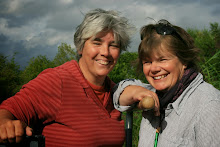
I was at the ceremony, 1st July 2011, when the Droitwich Canals were officially reopened... 40 years since restoration began.

"2,500 volunteering days to get here, £12million to make it happen, 21 miles of extra boating... Allow me to declare this restored canal open." Caroline Spelman (Secretary of State for the Department of Environment) unveiled the Droitwich Canals. The hurrahs that followed could never be more than an understatement of the achievements behind this moment.

Amongst the crowd there were work-worn faces glowing with "We did it!" and there were curious new faces that had sauntered across the road from town to see what the fuss was about.

Some of the big names in the waterways world could be spotted brushing through the bunting, and VIPs included Peter Luff MP and British Waterways' chairman Tony Hales. A marvelous day of suits and ice creams.

But the real red carpet treatment had to be meant for the 'volunteer'. This opening ceremony was a gathering of ordinary folk who had achieved extraordinary things over decades of enthusiasm and hard work for the restoration of the Droitwich Canals. Max Sinclair, the local canal enthusiast who launched the campaign to restore this canal over 40 years ago was there... his presence was the heart of the ceremony. The day drew old friends and gave tumultuous thanks to everyone who had clubbed together to make the reopening of the Droitwich Canals possible... and, for the cherry on the icing, the press got a stonking story to tell.

Martine and I gate-crashed the marquee to hear the opening speeches. Tony Hales spoke with his official hat on, and a personal smile for the achievement of a canal he knows well. "Vision, determination, skill, partnership" his words chorused the positive mood of the Droitwich canals, "obstacles can be overcome for a common cause working together".

Each VIP speaker struggled to thank every individual who'd helped the restoration project - yet the single word that hailed loudest from every corner was 'partnership'. The success of the Droitwich Canals Trust and the strong partnership behind it, was the tip-of-the-day for the future of all of Britain's canals. Where would our canals be without fundraisers and fund-givers, without people who care and people who 'do', without skills and shared knowedge, without local support and central consent?

But none of this is ground-breaking stuff, is it? The case for the benefits of 'partnership' is as old as the canals themselves. After all, a working partnership steered the Droitwich Barge Canal when it was first built by James Brindley, and opened in 1771... Entrepreneurs, engineers, navvies, land owners, local people and politicians.

So everyone seems to agree that partnerships are important. But partnerships without purpose are like ducks without water. Substancial commercial funding only comes to build a canal when it can rely on its future use, its raison d'etre. The mills and factories of the Industrial Revolution were the original business of the canal networks, and now the big industry is tourism. Heritage, wildlife, boating, walking, cycling, sightseeing and waterside attractions are brinking on an exciting new era for canal tourism (especially as the New Waterways Charity launches its PR campaign and public interest is set to boom).

The local area supported the Droitwich Canals because tourism is the 3rd largest industry for the County Council. It is estimated that the canal will bring 320,000 visits over 5 years and £2.75million per annum to the local economy with new jobs.

The pride of a nation is grateful to those behind the success of the Droitwich Canals... Now it's the language of tourism that must help guard the future of this canal, and every other canal in Britain.

Tuesday, 31 May 2011

"THIS IS OUR, THE WATERWAYS, BIG MOMENT"


CRICK BOAT FESTIVAL 2011
At the seminar talking about the new waterways charity set to launch 2012.

The annual waterways event. Crick. Sat, May 28. The hordes headed for the dancing gazebos of festival-fun and glam boats on the water... while the 50, or so, few took their seats inside the more sombre seminar tent at the festival. I sat near the back, a habit since school.

The panel was chaired by Richard Fairhurst (editor, Waterways World mag), with speakers - Simon Salem (Marketing Director, British Waterways) and Paul Roper (Inland Waterways Association).

"NEW" was the buzz word batted from the panel. The 'new waterways charity' will have new trustees, a new brand, new events, a new mood, new hopes, new-news.

Paul Roper publically announces from, and probably to, the IWA camp, "We will have to change our attitude". A weapons amnesty? (IWA is a campaigning organisation launched in 1946 to help keep our waterways navigable, with part of their role as a pressure group being to challenge some controversial BW decisions). Simon Salem gives weight to the magnificent task ahead, "We're working for the next 100 years, not tomorrow".

The rousting and refreshing tone must have silenced the handful of hobby-grumblers who traditionally turn up at events like this (where they can plebishly pop BW heads into medieval stocks and throw tomatoes). Nobody barked out loud with self-interest about their blocked Thetford or anything else they insist BW should put right for them. Perhaps the collective voice of the new waterways charity can leave the misery-mongers of yore out on a limb.

The earnest audience clung to the parcel of words unravelled by the panel, while the noise of Crick carried on outside. The festival hords, unaware, disinterested in the stuff of the seminar, symbolise the challenge for the 'new waterways charity' to engage the minds, hearts, skills and pockets of the waterways public, and the wider public. The job ahead is for us all to spread the word, and help build local volunteer bases for the future well-being of our waterways.

In 7 iconic words, Simon Salem lit the seminar's spotlight, "This is our, the waterways, big moment". The modest crescendo was usurped as 2 people wobbled into the tent with hot chips and cold chomping gums. Then all our empty seats filled in a flash as the new cohort arrived for the next seminar – 'Boat Buying and Ownership'.

Martine and I walked down the canal towpath, beyond the moored boats and the hum of the show. In the flurry of peacock-puffing waterways politics, it's easy to lose sight of what's so important to protect.

www.waterscape.com/things-to-do/volunteering
www.waterways.org.uk/support_us/volunteer

Friday, 6 May 2011

Big waterways Society?


We shall fight on the canal banks, we shall fight on the mooring grounds, we shall fight in the tunnels and in the locks, we shall fight on the aqueducts, we shall never surrender… is this the mood of live-aboard dissenters of the Big waterways Society?

As the amoebic rumblings of the 'new waterways charity' invite debate, fresh gunfire from the live-aboard corner is smoking predictably. And, true to form, the live-aboard remains either loathed or loved (ho-hum, better than neither loathed nor loved?)

Of course, the generic title has its contradictions – is the 'live-aboard' an economic migrant, a quirky misfit, a tourist attraction, a secretly envied escapee? The truth is, people who live on boats along Britain's inland waterways are just as diverse as any other community - old Mrs Jones and the new kid on the block, artists and writers, builders and mechanics, vicars and sinners, city bosses and jobless old-timers. Bless us all, we're one Big waterways Society!

When I was a live-aboard with a continuous cruiser's boat licence (significantly cheaper than permanent mooring fees), I kept on the move all year round. (Don't tell British Waterways but...) I cheated and overstayed at some of my favourite moorings... if I thought I could get away with it... and I happily stuck to the rules... when I had to. That was the way it was.

The Guardian (Andrew Mourant, April 27) tells us that live-aboards now fear for their lifestyle as the new waterways charity herds us to the future with plans to tighten rule enforcements. I've known canal-life since the 1970s when rules were less stocky and the waterways code only had to be implicitly passed on from boater to boater. But this is no time for selling rose-coloured specs. Since the 70s, derelict waterways have been restored (at unimaginable expense) and the networks are healthier, making our 'rights and responsibilities' operate differently today.

Thankfully, rule-abiding live-aboards who care about the canals will speak up for themselves, despite the loudest rogue live-aboard shoving his 'something-for-nothing' banner in the way. But, parallel to the debate, I wonder what will become of the silent squatter – the unknown boater, the lost soldier of landlubbers' conformity, the vulnerable soul that might be labelled a mental health service user if they were just the other side of the hedgerow in landlubbers' patch.

His half-tarpaulined floating shack has been moored in the same spot forever, and become the local Robinson Crusoe Wreck. He is the invisible dweller no one sees, yet his mark is stamped. His towpath patch is worn threadbare, his tyre-free bike is growing into the hedgerow, and his dangled contraptions (of unknown purpose) decorate the gunwales of his boat. He and the wretched few like him, spoil our views with their filthy noise from ungodly generators and wafts of salmonella from the portholes of their maggoty galleys. The Crusoe blight has been championed as the eye-sore of Britain's canal landscape. A common enemy, a fabulous scapegoat. We'll moan about him, safe in the knowledge that he'll stay inside his boat, passively ignorant, keeping his murky curtains drawn and his daily solitude to himself.

The Big waterways Society is home to these countable few. Now, as the battle for the new status quo on the waterways gets brutal, and passions roust for everyone's opinion (and cash), we'll find out if our unwilling Crusoe castaways from landlubbed society should become castaways from the waterways too? Is the 'new waterways charity' really the enemy?

(Please don't shout at me for my laziness: no gendered politics implied – read all he as he/she)

Monday, 28 February 2011

SMELLY BOOKS


They've arrived and a box is sitting on my desk. The new Cool Canals book - Britain's Great Waterways Outdoors. BW tweeted about us - "BWcomms. Just seen the fantastic new book from coolcanals... Looks good. Feels good. Even smells good!"

Aahh yes...that's what it's all about...smelly books. I know there's been an ebook revolution and, as a micro-publisher, I'm excited about the e-possibilities: but do I think ebooks will one day totally take the place of real books? (Guardian) Well... ebooks are cool, neat and functional, but you don't fondle them, you don't sniff them with deep indulgence and you don't turn the page with fumbling anticipation. For me that's the utter pleasure of books. Stop. I'm obsessing. Back to the question - do I think ebooks will ever totally replace real books? Absurd! No.

Anyway, on a similar note, my rant of the day: most folk agree libraries are the delicious place of safety where children want to roll to the edge of their imagination. Passion for books is contagious, and libraries spread the bug. As libraries face cuts and closure, should we take away the right of every child in Britain to experience the joys of books? Libraries are trusted, accessible resource centres for the whole community. Should Mr C's Big Society shout and make a noise about the loss of the real pub, the post office and now the neighbourhood library. Campaign

Dfrrrrxszdddd (Oops. Tufty, the coolcanals cat, wrote the last word with her paws as she walked over my laptop keyboard. Not sure what her point is)

Tuesday, 27 July 2010

School holidays on the canals

It's holiday time and the canals have something in the air again. The kids have broken up!

I've just put down my Bill Bryson book (Notes From a Small Island) and his train of thought has sent me drifting into a pointless muse over how foreign visitors to our island might interpret the Brit phrase - "The kids have broken up".

What does that mean? Broken in most Pavlovian respects doesn't sound too good to me. Broken (by definition implies out of order), broken-down (in despair, needing fixing), broken-up (as in disintegrated, or worse, potentially ruined).

So when the kids break up, do they scatter into chaos from their safe homogenised mass? Does it scare us that they come to sunny canals all across Britain in ones and twos, with bikes, on boats, in flip flops and wide-eyed smiles on the towpaths?

Answers on a postcard.

Thursday, 27 May 2010

Can Art help get Britain's canals out of their current financial crisis?

Ignore it, adore it, spit at it or laugh out loud at it... Art always contributes to every society's consciousness. From an English village where playschool pinnies come out for paint play, to the scars of Iraqi slippers on the vandalised statue of a fallen dictator.

But what has art got to do with any campaign to save our waterways? (IWA campaign:
http://www.waterways.org.uk/campaigns/campaigns/campaigns) Well, everyone knows canals have Roses & Castles – the traditional folk art of the people who worked and lived on canal boats in the Industrial Revolution. Decorated pots and pans add to the tourist attraction, and make neat souvenir trinkets. Good stuff for small craft businesses across the waterways.

But we're not silly, we know pots and pans aren't enough to get the waterways out of their financial crisis?

More public support for the waterways is what matters at the moment. More press coverage. More visitors. Every so often, British Waterways sets artists loose on the towpaths to prick public interest and hopefully prod the press into precious media coverage. Fake holes on the towpath and controversial installations of dog-poo in trees do the trick http://www.waterscape.com/features-and-articles/news/2453/for-arts-sake-slow-down. But imagine the impact of a much grander, iconic, public art project.

My point is this:

Antony Gormley sculptures.
http://bit.ly/9gTsGT Take 3 of his most famous projects:
1) The Angel of The North rolls around every speeding heart on the A1.
2) Iron Man stands silently, with the audacity to rust away in Birmingham city centre.
3) Another Place, Crosby Beach, near Liverpool, where the statues of 100 iron souls gaze out to sea, with hope beyond the tides.

Mr G's sculpture and the spirit of the waterways would go together like jam and Victoria sponge cake. After all, Britain's canals were our first motorways, made for boats during the Industrial Revolution - and now they offer a vision of hope for urban regeneration, and an accessible escape to rural Britain. Right up Mr G's street!

Imagine Gormley's Iron Men of the Waterways, and where they might stand...

The Angel of the Caen Hill flight wistfully watching over travellers?

Iron Waterways Man daubed in Roses & Castles outside the waterways museum? http://bit.ly/c6lXEE (attracting visitors as the Puppy sculpture does outside the Guggenheim in Bilbao - http://bit.ly/z5os9)

Statuesque souls half-immersed in river silt at the moody brink of the Gloucester & Sharpness Canal? (Crosby Beach has been inundated with visitors since Gormley's sculptures arrived there)

Or what about a solitary Iron Waterways Man on a lonely bit of the Pennine cruising ring? Or Iron Waterways Man graffiti-sprayed by Camden's community?

Imagine the monumental tourist attraction and what that could do for the canals, politically and financially. Imagine the thrill of one day meeting Iron Waterways Man on your travels.

Canals should always be about boating, but they were born and have survived through a tradition of entrepreneurialism and creativity. The real Iron men (and women) of the waterways.

Am I alone on this one?


Wednesday, 5 May 2010

Waterways for everyone: boats, bikes and walking boots?

All ducks are equal. But are some ducks more equal than others?

"Pah!" say some boaters - but economic need and ethical responsibility is driving the mood of canal folk to properly share our secret national treasure of 2,000 miles of linear heritage. The future of Britain's canals can't be ruled by boaters alone – canals are increasingly used for waterside outdoor pursuits too. Towpaths are being improved, and sometimes even controversially hardsurfaced, to make flat cycle routes and easy canal walks.

IWA, the Inland Waterways Association, have just published a typically rational, informative and ever-so-tactfully provocative article (by Mark Bradley and Keith Goss)
www.waterways.org.uk/waterways_magazine on the changing status of Britain's canals... i.e. how we can use them for everything from holiday boating to jogging along the towpath. But when pedal power, boat power and quiet people in walking boots all syphon together in one narrow zone, surely that spells conflict?

Speaking from my own canal experiences as: 1) live-aboard narrowboater 2) long distance canal walker 3) slow canal cyclist.
When I'm in a canal boat, I'm not keen on coach-loads of strolling gongoozlers getting dangerously in my way at the lock gates; when I'm on my bike, I loathe pedalling in first gear behind gaggles of walkers hogging the towpath; when I walk canals, I rage at bike-bells and lycra gusts of wind knocking me into the canal. All 3 of me want it our own way! That said, as all canal goers know, everyone meets up at the end of the day in the local canalside boozer, to share the best of canal life - a pint of mild in a good old-fashioned canal pub solves everything.

And in the same solidarity, cyclists, walkers and boaters are willing to join together on the campaign to Save Our Waterways from blunderingly short-sighted goverment funding cuts. In my bones I know it's an excitingly tough time for canals... and I am (despite selfishly wanting to keep the canal world all to myself) really glad more folk than ever are discovering the secrets of the canals. Yet, in the success of popularizing the waterways, my heart would break if every beautifully clumpy canal towpath was tarmacked so it could be described as accessible to all: canal nature, integrity, heritage and slow manners jeopardized! Off-the-beaten track adventures for canal trail walkers like me would be ruined. Imagine the outcry if Britain's other footpaths, the National Trails, the Offa's Dyke Path, the Pennine Way or the Cotswold Way were smothered in Tarmac! Horror NO!! I'm an activist to protect long-distance canal walks. "Let me smell the soil, scuff the grass, KEEP CANAL WALKS GREEN!"

It goes without saying that bringing investment to the canals is the task ahead. Yet what's special about canals to me is not what money can buy, but more pressingly what we might lose without proper funding.... irreplaceable heritage, unique landscape, slow culture, stoic solitude and a special sense of community that another Britain has lost. Balancing everyone's needs and respecting the territory is the trick. Canals can offer a perceived escape from the hierarchies of consumerism that's priceless. So when it comes to planning for our waterways future, should we be mindful of who gets the biggest say? The Mallard with the loudest voice, the fat Goose who waves the largest wad of money, the decoy Coot... or just a bunch of us daft Ducks?